
The short version
- Close windows and doors, and point out any broken seals.
- Move cars, furniture, décor and potted plants away from the house and off the driveway.
- Keep pets inside until everything is rinsed and dry.
- Tell the crew about delicate plants, gardens, loose siding, peeling paint and anything fragile.
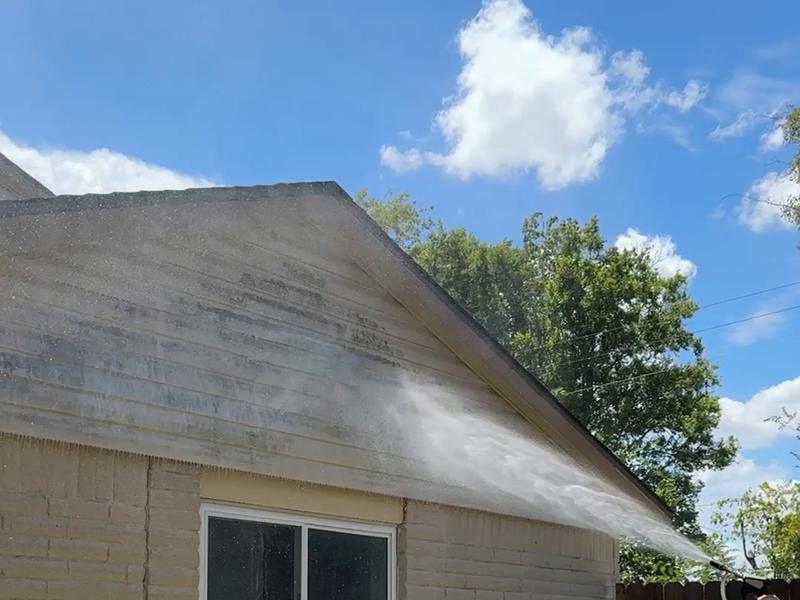
Whether it's a soft wash on siding or a pressure wash on the driveway, the crew will be working with a lot of water, and on soft wash jobs, a cleaning solution. Prep is mostly about keeping water out of places it shouldn't go and keeping solution off things that matter to you.
The day before: around the house
- Close and latch windows and doors, including garage doors near the work area. Consumer Reports warns against spraying water directly into gaps around doors and windows (Consumer Reports), so point out any windows that don't seal well.
- Move cars off the driveway if it's being cleaned, and away from walls being washed, so overspray doesn't land on them.
- Clear the walls. Pull patio furniture, grills, planters, wreaths, doormats, toys and décor a few feet away from the house.
- Pick up the yard. Hoses, tools, kids' toys and pet bowls are easier to clear before the crew arrives.
- Turn off sprinklers for the day so they don't spray the crew or rewet clean surfaces. If you're on well water, sprinklers can also leave orange iron stains on concrete; see rust stains on concrete.
- Just fertilized? Sweep stray granules off the driveway first. Some fertilizers contain iron and can stain concrete when they get wet (The Andersons).
Plants and gardens
- Point out delicate plants, vegetable gardens, herbs, fish ponds and fountains. Extension experts advise caution with edible plants that get splashed by cleaning chemicals (Ask Extension).
- Move potted plants away from the walls.
- Water beds near the house if you're asked to. Soaking plants before soft washing, keeping them wet during the job and rinsing them after are standard plant-protection steps (JRacenstein).
If a leaf does get splashed, rinsing it right away with clear water is the best fix (Ask Extension). More detail is in soft wash chemicals, plants and pets.
Pets and kids
- Keep pets inside (or away from the work area) for the whole job.
- Let them back out once surfaces are rinsed and dry. The ASPCA's guidance for diluted bleach is that it be thoroughly rinsed and allowed to dry before pets are around it (ASPCA).
- Tell the crew about dogs in the yard, pet doors and anything else that might open onto the work area.
Access, water and scheduling
- Water: house washing uses a lot of water, so the crew may need an outdoor spigot that works. Ask when you book whether yours will be used, and mention any spigot that leaks or is hard to reach.
- Gates and access: mention locked gates, gate codes and side yards when you book, so every area being cleaned can be reached.
- Being home: ask when you book whether you need to be there. Either way, it helps to be reachable by phone.
- Weather: rain or high wind can change plans. Wind can carry spray where it shouldn't go.
Things to point out to the crew
- Loose, cracked or missing siding. Consumer Reports advises repairing or replacing loose or damaged siding so water isn't trapped behind it (Consumer Reports).
- Peeling paint, rotten trim and failing caulk.
- Outdoor outlets, lights, cameras, doorbells and vents.
- Your siding type, if you know it. Manufacturers set different limits; see can pressure washing damage siding?
- A house built before 1978? Consumer Reports recommends having old exterior paint tested for lead before washing (Consumer Reports).
- New concrete poured within the last month or so. New concrete typically takes 28 days to fully cure (Concrete Network).
Safety note: Stay clear of the work area while the crew is spraying, and keep kids and pets back too. Pressure washer streams can injure skin and eyes (Consumer Reports).
After the wash
- Let things dry before pets, kids and furniture go back.
- Give plants near the house another drink of clear water. Rinsing helps wash off any residue (Ask Extension).
- Look it over in daylight. Cleaning solutions shouldn't be left to dry on siding (James Hardie), so if you see streaks or spots once it dries, mention them.
- Plan the next one. See how often to wash your house.
Quick answers
Do I need to be home during a house wash?
Ask when you book, since it depends on the job and the company. Either way, make sure the crew can reach every area being cleaned, knows about gates and pets, and can reach you by phone.
Should I close my windows before a house wash?
Yes. Close and latch windows and doors, and point out any broken seals or gaps. Consumer Reports warns against spraying water into gaps around doors and windows.
What should I do with my plants before a house wash?
Point out delicate plants, vegetable gardens and ponds, and move potted plants away from the walls. Soaking plants before soft washing and rinsing them afterward are standard steps, and any plant that gets splashed should be rinsed with clear water.
When can pets go back outside after a wash?
Once surfaces are rinsed and dry. The ASPCA's guidance for diluted bleach is that it be thoroughly rinsed and allowed to dry before pets are around it.
Should I move my car out of the driveway?
Yes, if the driveway is being cleaned. It's also a good idea to move cars away from walls being washed so overspray doesn't land on them.
Sources
- Can You Pressure-Wash It?, Consumer Reports. https://www.consumerreports.org/home-garden/pressure-washers/surfaces-safe-to-clean-with-a-pressure-washer-a5445180933/
- How to Protect Plants When Soft Washing, JRacenstein. https://jracenstein.com/expert-advice-learning/how-to-protect-plants-when-soft-washing
- Bleach Plant Damage (expert response), Ask Extension. https://ask.extension.org/kb/faq.php?id=802454
- Plant damage from deck bleach (expert response), Ask Extension. https://ask.extension.org/kb/faq.php?id=843189
- Poisonous Household Products, ASPCA. https://www.aspca.org/pet-care/aspca-poison-control/poisonous-household-products
- Siding Cleaning and Maintenance (Technical Bulletin), James Hardie. https://assets.ctfassets.net/dzi2asncd44t/1mcW7pxuTmKq1nWLOgTRbW/40f30c33fe5a8f9b9ea5ffdbffae86ae/20-james-hardie-siding-cleaning-and-maintenance.pdf
- New Concrete? Common Care Questions Answered, Concrete Network. https://www.concretenetwork.com/concrete/new-faqs.html
- The Andersons GreenShocker 7-1-2 product directions, The Andersons. https://andersonslawn.com/products/green-shocker-7-1-2
Links checked October 19, 2026. This page is general information, not a substitute for your manufacturer's instructions or a product label.