
The short version
- Dirt, grime and organic growth usually respond well to a proper wash.
- Rust (orange or reddish-brown) usually needs a rust-specific treatment. Pressure and bleach don't dissolve it.
- Oil soaks into concrete. Fresh spots respond better than old ones, and old stains may lighten rather than disappear.
- Treated spots can end up lighter than the concrete around them.
Start by identifying the stain
The Concrete Masonry & Hardscapes Association (CMHA) says no one should try to remove a stain until it's identified and the right removal agent is chosen. Using the wrong product, or using a product the wrong way, can spread the stain or make it worse (CMHA).
| What you see | Likely cause | What usually helps |
|---|---|---|
| Black, green or dark gray patches, often in shade | Dirt, mildew, algae | Washing. Consumer Reports suggests lower pressure and a sudsy pre-treatment for mold or mildew (CR). |
| Orange or reddish-brown spots, specks or sprinkler-shaped arcs | Rust (iron) from fertilizer, irrigation water or metal objects | A rust remover, such as an oxalic acid product (Ask Extension) |
| Dark, slightly glossy spots where cars park | Motor oil or grease | Degreaser and hot water; a poultice for older stains (Mi-T-M, CMHA) |
| Reddish-brown film or tracked-in mud | Clay and soil | Dry brushing, then washing (CMHA) |
Rust: why it ignores pressure
Rust stains are iron that has oxidized and set into the surface. Water pressure alone usually won't lift it, and the Texas Well Owner Network notes that iron causes reddish-brown stains on concrete (and laundry and fixtures), that detergents don't remove those stains, and that chlorine bleach may even make them worse (Texas Well Owner Network). That's why a soft wash or bleach-based cleaner isn't the answer for rust.
Where it comes from
- Lawn fertilizer with iron. One fertilizer maker's directions warn that, because of the iron content, particles left on driveways and sidewalks may stain, and say to sweep stray particles back onto the lawn (The Andersons).
- Irrigation water high in iron, often from a private well, which leaves orange arcs where sprinklers hit the concrete (Texas Well Owner Network).
- Metal objects: patio furniture legs, grills, tools or cans left sitting in the rain.
How it's treated
The method the Portland Cement Association recommends, as cited by Ask Extension, uses oxalic acid. The expert response also passes on a warning from New Mexico State University Extension: oxalic acid is poisonous and corrosive, children and pets should be kept away, and it will burn plants if it splashes onto lawns or beds (Ask Extension). If you try a store-bought rust remover yourself, follow its label exactly, test a hidden area first and rinse thoroughly.
Oil: soaked in, not sitting on top
Concrete is porous, so oil doesn't just sit on the surface. Mi-T-M, a pressure washer maker, says hot water is a must for surfaces with grease or oil on them (Mi-T-M), and Consumer Reports notes that a finer nozzle is more effective for spot-cleaning grease (Consumer Reports). A degreaser helps too.
For stains that have soaked in, CMHA describes a poultice: a paste made from an absorbent powder and a solvent, which helps keep the stain from spreading and tends to pull it out of the pores (CMHA). It can take more than one round.
Honest expectations: fresh drips respond best. A stain that has been soaking into a driveway for years may lighten rather than vanish.
Red clay and mud
For clay and dirt, CMHA advises removing as much as possible with a dry brush first, then scrubbing with water and a little detergent, and using stiff fiber or nylon brushes rather than steel wire, because steel bristles can leave metal bits that later rust (CMHA). If a reddish tint is still there once the dirt is gone, it may be iron staining that needs a rust treatment rather than more pressure.
Why a "spot fix" can look patchy
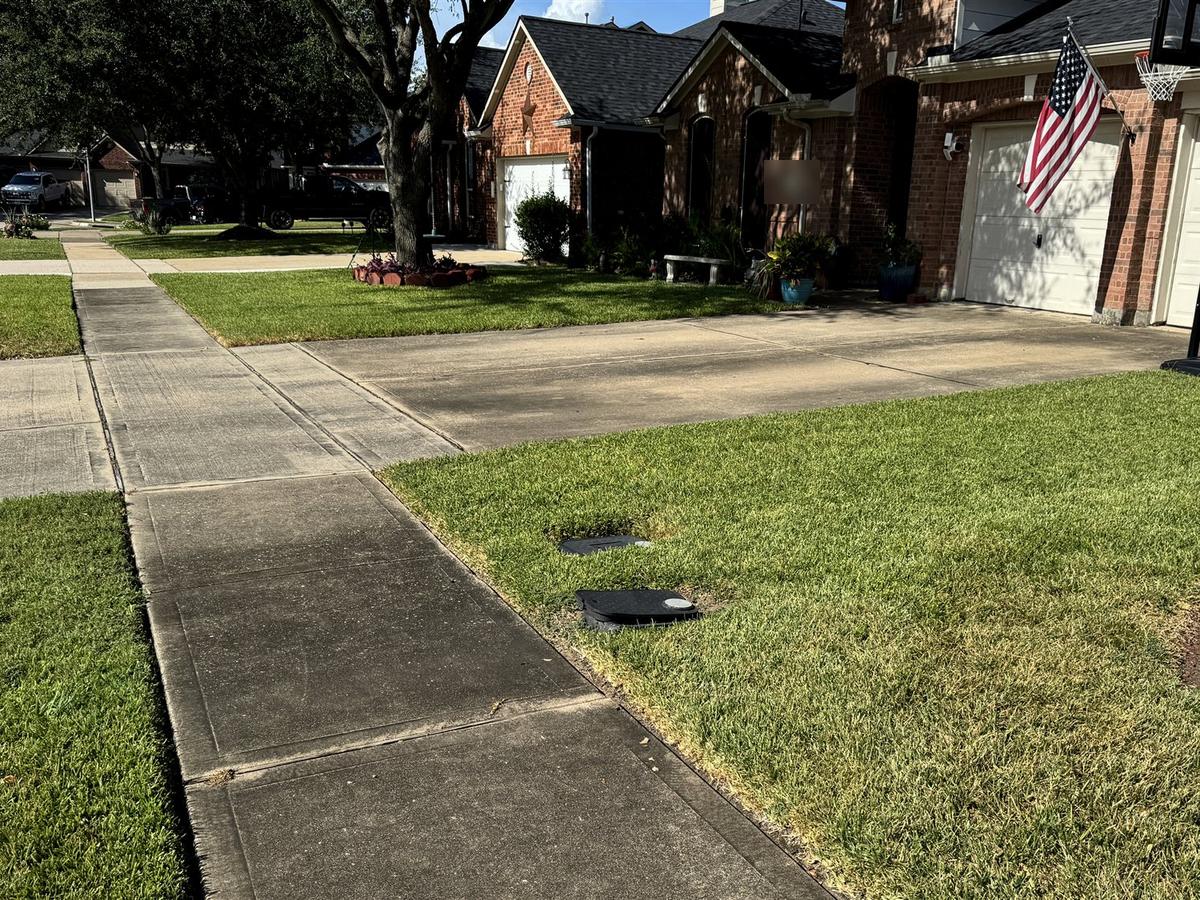
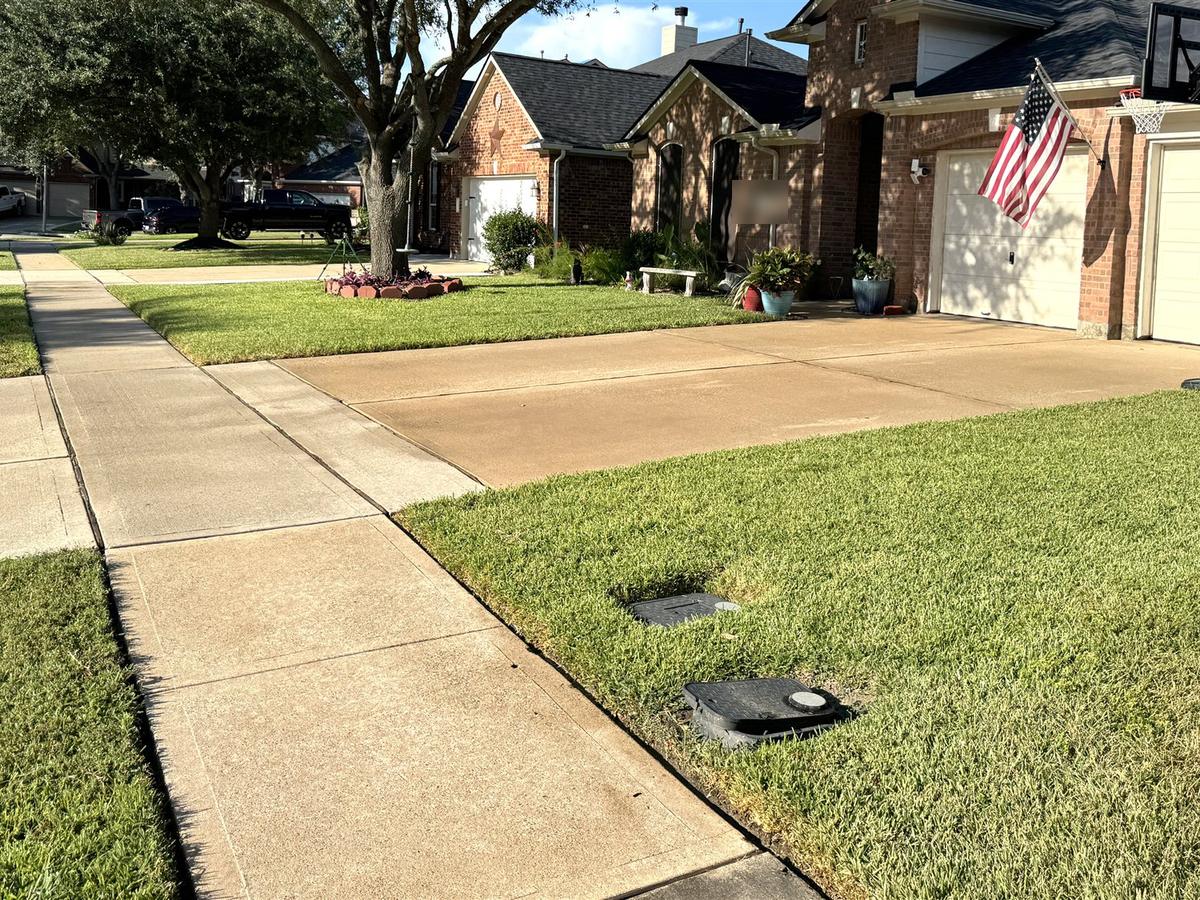
CMHA notes that removing a stain can leave the treated area lighter in color than the rest (CMHA). Cleaning the whole driveway evenly, rather than blasting one spot, gives a more uniform result. A rotary surface cleaner helps here, since it keeps the nozzles at an even distance for a balanced pattern (Mi-T-M).
Safety note: Concrete Network advises against harsh chemicals such as muriatic acid on concrete, and suggests keeping pressure washers under 3,000 PSI to avoid etching (Concrete Network). Never mix cleaning chemicals, and keep acids off plants, pets and skin.
Keeping stains from coming back
- After fertilizing, sweep or blow granules back onto the lawn before watering (The Andersons).
- Aim sprinkler heads away from the driveway and walks.
- On a well? Have the water tested for iron. The Texas Well Owner Network covers treatment options (Texas Well Owner Network).
- Put a drip pan or mat under a car that leaks, and blot fresh oil quickly.
- Don't leave metal furniture, cans or tools sitting on concrete in the rain.
How ACE approaches driveways
We clean driveways and sidewalks with a 3,000 PSI, 5.5 GPM pressure washer and a 20-inch surface cleaner, and we generally apply any cleaning solution after the surface-cleaner pass rather than before it. Degreasing oil stains is an add-on; just ask when you request your quote. If you have rust or oil stains, mention them then, and we'll tell you honestly what to expect.
Quick answers
Can pressure washing remove oil stains?
It can lift fresh or surface oil, especially with a degreaser and hot water, but oil that has soaked into concrete for a long time may only lighten. A poultice, a paste that draws the stain out of the pores, is often the next step.
Why won't pressure washing remove rust stains?
Rust is iron that has set into the concrete, so water pressure alone usually won't lift it, and chlorine bleach can make iron stains worse. Rust usually needs an acid-based rust remover, such as an oxalic acid product, used according to its label and rinsed thoroughly.
What causes orange stains on my driveway?
Common causes are iron-containing lawn fertilizer left on the concrete, sprinklers using water that's high in iron, and rusty metal items. One fertilizer maker's directions warn that particles left on driveways and sidewalks may stain.
Will a cleaned stain spot look different from the rest of the driveway?
It can. The Concrete Masonry & Hardscapes Association notes that removing a stain sometimes leaves the treated area lighter in color, which is one reason to clean the whole surface evenly.
How do I keep rust stains from coming back?
Sweep fertilizer granules back onto the lawn before watering, aim sprinkler heads away from concrete, and if you're on a well, have the water tested for iron.
Sources
- Removal of Stains From Concrete Masonry (TEK 08-02A), Concrete Masonry & Hardscapes Association. https://www.cmha.org/resource/tek-08-02a/
- Can You Pressure-Wash It?, Consumer Reports. https://www.consumerreports.org/home-garden/pressure-washers/surfaces-safe-to-clean-with-a-pressure-washer-a5445180933/
- Drinking Water Problems: Iron and Manganese, Texas Well Owner Network, Texas A&M AgriLife. https://twon.tamu.edu/wp-content/uploads/sites/3/2021/06/drinking-water-problems-iron-and-manganese.pdf
- GreenShocker 7-1-2 product directions, The Andersons. https://andersonslawn.com/products/green-shocker-7-1-2
- Rust stains in concrete, Ask Extension. https://ask.extension.org/kb/faq.php?id=591530
- Pressure Washer FAQ (hot vs cold water; rotary surface cleaners), Mi-T-M Corporation. https://www.mitm.com/consumer/pressure-washers/
- New Concrete? Common Care Questions Answered, Concrete Network. https://www.concretenetwork.com/concrete/new-faqs.html
Links checked October 19, 2026. This page is general information, not a substitute for your manufacturer's instructions or a product label.